Contributed 30 October 2003
If you wish to respond to the author, e-mail me jcboehm@freeshell.org
and I will post or pass along any responses, or put you in touch with
the author.
The photograph on the dashboard taken years ago
Turn around backwards so the windshield shows
Every streetlight reveals a picture and a verse
Still, it’s so much clearer
I forgot my shirt at the water’s edge.
The moon is low tonight.
When these words are sung, I almost don’t care what they really mean. No, I definitely don’t care what Stipe meant at all. Just listening to the surface allusions is enough to send my mind reeling through a soft frenzy of images and memories that allow me to feel their depth, rather than understand it. Comfortable in my thoughts, I start connecting the dots of my life in a kind of nostalgic haze, awash with emotion and feeling. It‘s as though I am unconscious and awake at the same time, thinking about breathing but not about thinking. This is R.E.M.
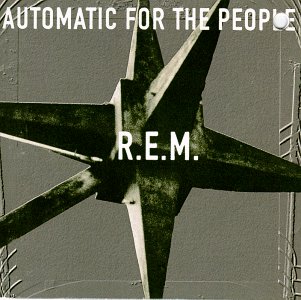
Within the alternative music genre, Nightswimming is the quintessential example for how to place a listener within a context, and R.E.M.’s Automatic for the People is arguably its best commentary on the human condition during the last decade.
Okay, okay…. So maybe I am getting away with myself here, but undoubtedly Automatic is an intensely insightful look into the hearts and souls of a generation of people. Growing up in the early nineties is an uncomfortable experience for many, myself included. Suddenly technology became interesting with the personal computer revolution, homosexuality walked into the mainstream, gender roles were all confused, and communication was turned on its head by email, cell phones, and pagers. (Remember pagers?) A good friend of mine has a word for the mark left on the human experience by this time and the situations arising from it: fragmented.
R.E.M. saw this as it began to happen, and made an album appealing to the sufferers of this fragmented generation. But do not mistake their message for sympathy; it is much more about opportunity, understanding, and most especially, memory. This album is about life and just how deeply personal it is – it may seem like a simple idea, but it is an idea the fragmented generation somehow lost in the mix.
When Stipe sings to us about the photograph on the dashboard, or sings “I will try not to breathe / I can hold my head still with my hands at my knees,” or “Here’s a little ghost for the offering / Here’s a truck stop instead of Saint Peter’s,” he is counting on us as the listener to make his songs work. Without our imagination, the idea of the mental image, his words hold relatively little power. The most beautiful part about his lyrics is that everyone, trying to get it, never will. It’s as though every word he says is a sign pointing your mind down the right country road, but it’s not the road he wants you to see; it’s the scenery gently rolling by. The only way you’re going to catch it is by letting curiosity turn your gaze towards that side window. It is only when you give your imagination to Stipe and the music behind him that you’ll ever really understand R.E.M.
Though congruent with Stipe’s lyrics, Automatic is an album (similar to U2’s The Joshua Tree) where a listener can find meaning in the music. New Orleans Instrumental No.1 does not even have vocals, but the images and memories come flooding out of it. Peter Buck’s guitar weeps volume swells and creeps on the edge of feedback reminding us that Hendrix’s influence is everywhere – even in the most peaceful and lonely of musical landscapes. Drive also serves this argument well. I approached the song at first (like I mistakenly do every time I get a new R.E.M. album and listen to the first song) trying to get something from the lyrics. However, when I laid back and just listened to the nuances and the slow movement of the song, waiting for the promised explosion I always think is coming, no matter how many times I listen, I am always disappointed – and that’s exactly the point.
Also in this category is the often overlooked Sweetness Follows. In recent years I’ve begun to think of this song in conjunction with Cameron Crowe’s movie Vanilla Sky. It’s laid into the movie at the perfect point – right where Tom Cruise’s ill-fated character, David Aames, has hit rock bottom. His face is damaged in car accident caused by a stalker, the board members of his company are getting ready to mutiny against him, his father is dead, and his best friend has seemingly stolen the only woman he ever loved. During this point, passed out drunk and alone, in the back alleys of New York, Aames realizes it can’t get any worse. And the song starts playing. After watching the movie over and over, I sometimes think Crowe wrote the script just to fit with that music. Stipe sings about the bad times in life everyone can relate too – burying your parents, your siblings, etc... it's at times such as these that he tells us, the sweetness follows. In this part of the film exists Crowe’s personal experience with the song. This is his mental image, his memory.
Also, not to be forgotten is John Paul Jones. Yes, I said John Paul Jones, who arranged all the string compositions heard on the album. (Automatic was one of the first albums to take advantage of full orchestration, which is now startlingly widespread on the Alternative scene). His best work is on Sweetness Follows, and in particular Nightswimming where his string arrangements take us from the photograph on the dashboard to the outer reaches of the solar system and back again. He has found a way to talk with strings, but not like Mozart or Beethoven. Jones just sits in the back of the song, pulling your thoughts this way and that, without you ever realizing it.
In all these ways R.E.M. comments on the lives of us, the fragmented generation. They understand our pain, but they want us to see the opportunities that can arise from it. R.E.M. wants us to learn to love our time. They see the possibilities here for discussion between cultures, for ideas made real, for discourse on music. The way they help us understand this is through the mental image, more specifically the personal mental image, through our memories. Every song on the album (with possibly the exception of Ignoreland – Stipe’s political attack on conservatism which even he says shouldn’t be on the album) is personal. Few artists can claim to have achieved this level of intimacy with their audience. I recently listened to Jeff Buckley’s Live at Sin-e, and thought back to how Automatic worked much the same way – it is as though the artists were talking to me between songs, but in reality neither group really did. Our experience feels personal because of the nature of their music and its attachment to our imaginations and memories.
Man on the Moon and Try not to Breathe work their way onto the album as highlights of this concept, close to the wonder of Nightswimming. Before Man on the Moon, I had seen Andy Kaufman on TV. I understood that he was a comedian, but I didn’t know him until I pieced together his life from this song and I related his struggle for creativity, for understanding, with my own. On Try not to Breathe, I understand the Kevorkian references and the questions about assisted suicide. But what I really start to think about is my grandfather, now 80 and suffering from prostate cancer and if such thoughts ever go through his mind. Also of course, my own mortality, and how I’ll feel when I’m older and dealing with the downward side of life.
These songs speak to us in a way I’m not sure any artist since has happened upon. They are somehow inherent to our thoughts, regrets, dreams, and disappointments. I feel like I found myself when I found this album, and all these years later, with every listen I’m still discovering what it is to be me.
Here's a little agit for the never-believer. Yeah, yeah, yeah, yeah…
Contributed 30 October 2003
If you wish to respond to the author, e-mail me jcboehm@freeshell.org
and I will post or pass along any responses, or put you in touch with
the author.